

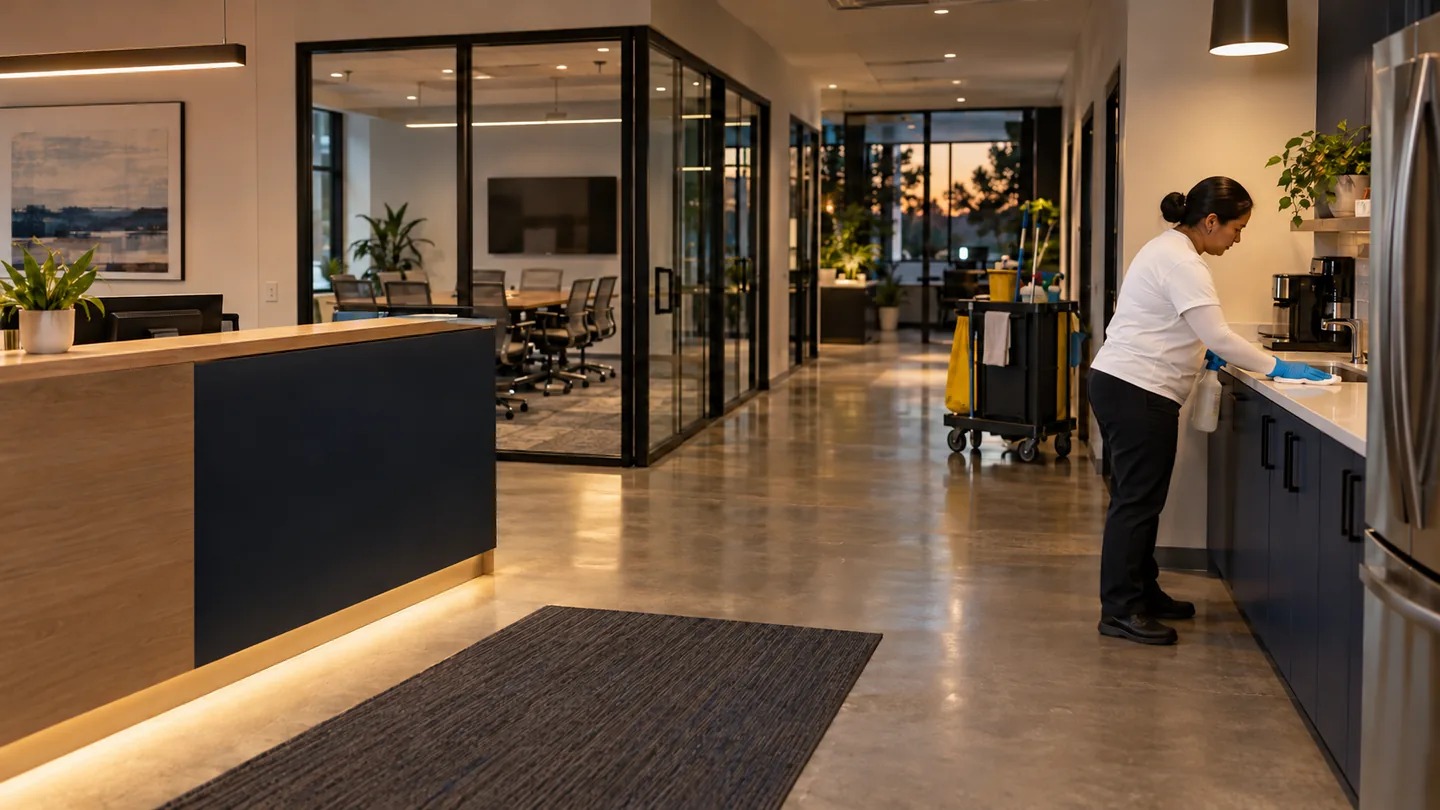
An office cleaning scope should list rooms, tasks, frequency, access and boundaries around employee belongings. Assign a contact for problems and specify how completion is recorded. For specialized workplaces, confirm the applicable requirements with the responsible facility professional before assuming an ordinary office-cleaning plan is sufficient.
Map the space by actual use
Identify occupied desks, meeting rooms, reception, shared kitchens and restrooms. Note rooms that are seldom used and areas with heavier traffic. Decide which spaces need attention each visit and which tasks can be scheduled periodically. Ask employees to clear agreed surfaces rather than expecting cleaners to sort documents. Establish exclusions for equipment, cables, private offices and confidential materials so a clean desk does not create an information-handling problem.
Make access and timing workable
Confirm after-hours entry, parking, lighting and the procedure for securing the office when work ends. Provide keys or codes through the approved channel, and keep a current contact for access failures. Identify meetings or business activities that change the normal schedule. Discuss noise-sensitive work, supplies storage and waste removal. A cleaning team needs a defined window and responsibility for lockup rather than informal instructions that change depending on who leaves last.
Track quality with a short issue log
Use observable checks for restrooms, break-room surfaces, accessible floors and agreed waste handling. Record repeated concerns by task and location so the scope can be adjusted. Separate facility repairs from cleaning feedback, and define who authorizes extras. Review the schedule after staffing, occupancy or operating hours change. A clear log allows the business and provider to resolve a specific issue without repeating broad requests to “do better” at the next visit.
Checklist for your next visit
- Map occupied areas and shared spaces.
- Set task frequency and periodic work.
- Define boundaries for desks, equipment and documents.
- Confirm after-hours access and lockup responsibility.
- Provide a contact for schedule or access problems.
- Keep maintenance issues separate from cleaning feedback.
Frequently asked questions
Should cleaners move papers and computer equipment?
Specify boundaries in advance. Employees should clear agreed surfaces; confidential documents and equipment should not be handled without a defined arrangement.
Is every workplace covered by a standard office scope?
No. Specialized settings may need different protocols or providers. Ask the responsible facility professional to confirm requirements for your environment.